The basic requirements for reciprocating engine ignition systems are similar, regardless of the type of engine. All ignition systems must deliver a high-tension spark across the electrodes of each spark plug in each cylinder of the engine in the correct firing order.
The spark occurs in the cylinder at a predetermined number of degrees before the piston reaches top dead center (TDC), as measured by crankshaft rotation. The system's output voltage must be sufficient to produce a spark across the gap between the spark plug electrodes under all operating conditions. The spark plug is threaded into the cylinder head with the electrodes exposed to the combustion chamber.
Reciprocating engine ignition systems can be divided into two classifications: magneto-ignition systems and electronic Full Authority Digital Engine Control (FADEC) systems.
Magneto-ignition systems can also be classified as either single- or dual-magneto systems. A single magneto-ignition system consists of one magneto and the necessary wiring and is typically used with a second single magneto on the same engine. A dual magneto generally uses one rotating magnet to supply two complete magneto systems contained within a single housing. An example of each type is shown in Figure 1.
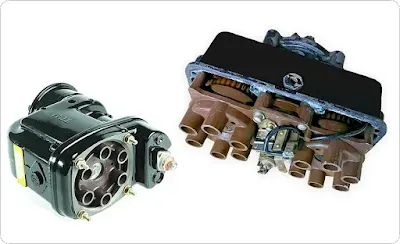 |
| Figure 1. Single and dual magnetos |
Aircraft magneto-ignition systems can be classified as either high-tension or low-tension. The low-tension magneto system, covered in the Magneto-Ignition System Operating Principles section, generates a low voltage that is distributed to a transformer coil near each spark plug. This system eliminates some of the problems inherent in high-tension systems, particularly those associated with containing high voltage until it reaches the spark plug.
Early materials used for ignition leads could not reliably withstand high voltage and were prone to allowing voltage to leak to ground before reaching the spark plug. As improved materials and shielding were developed, many of the problems associated with high-tension magneto systems were overcome. The high-tension magneto system remains the most widely used ignition system for reciprocating aircraft engines.
Some early aircraft used a battery-ignition system. In this system, the source of energy is a battery or generator rather than a magneto. This system was similar to that used in most automobiles at the time. Figure 2 shows a simplified schematic of a battery-ignition system.
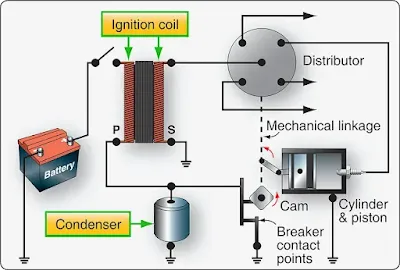 |
| Figure 2. Battery-ignition system |
Quick Review: Reciprocating Engine Ignition Systems
Why do reciprocating aircraft engines commonly use two ignition sources?
Dual ignition improves reliability and combustion efficiency. Two spark plugs in each cylinder provide separate ignition paths and allow the flame to spread from two points within the combustion chamber. If one ignition source fails, the remaining system can usually continue to provide engine ignition.
What happens if one magneto fails during engine operation?
The engine can normally continue operating on the remaining magneto because each ignition system functions independently. However, a reduction in engine performance and an increase in combustion time may occur because only one spark plug per cylinder is firing.
Why must ignition occur before the piston reaches top dead center?
The fuel-air mixture does not burn instantaneously. Igniting the mixture before top dead center allows sufficient time for the flame to develop and cylinder pressure to rise so that effective combustion pressure is available during the power stroke.
Does a magneto require the aircraft battery to produce an ignition spark?
No. A magneto is a self-contained electrical generator driven by the engine. It produces the electrical energy required for ignition independently of the aircraft battery or main electrical system, helping maintain ignition even if aircraft electrical power is lost.
Explore Related Topics →
Magneto Systems
Magneto-Ignition System Operating Principles
Explore how magneto ignition systems generate, distribute, and deliver high-voltage electrical energy to engine spark plugs.
Open Article →
Electronic Control
FADEC System Description
Review electronic engine control, low-voltage harnesses, ECU operation, and integrated ignition system functions.
Open Article →
Starting Ignition
Auxiliary Ignition Units
Learn how booster coils, impulse couplings, and retard breaker vibrator systems improve ignition during engine starting.
Open Article →
Ignition Components
Spark Plugs
Examine aircraft spark plug construction, operating characteristics, and their role in reciprocating engine combustion.
Open Article →
System Maintenance
Reciprocating Engine Ignition System Maintenance & Inspection
Review inspection and maintenance practices used to identify faults and maintain reliable reciprocating engine ignition operation.
Open Article →
Ignition Timing
Magneto-Ignition Timing Devices
Explore timing marks, timing discs, piston position indicators, and timing lights used for magneto ignition timing.
Open Article →


